The question
HUSK is not intended to be a traditional morality game, power fantasy, or survival simulator.
The human condition under extreme emotional and environmental pressure.
This is not a new idea. What is new is how far HUSK is willing to take it. We want to explore the emotional and moral consequences of survival, with a willingness to cross uncomfortable boundaries that games rarely attempt.
The question is not simply, “Can I survive?”It is, “After this choice, will I still respect the person I am?”
Emotional consequence
Human, not game-like.
HUSK does not aim to judge the player through a clean morality meter, a binary good-and-evil path, or an artificial redemption system. It focuses on emotional consequence.
Relationships change. Trust changes. Emotional warmth, body language and atmosphere change. The consequences are not there to award a score; they are there to continue living inside the world.
- Grief
- Guilt
- Attachment
- Sacrifice
- Trust
- Regret
- Fear
- Endurance
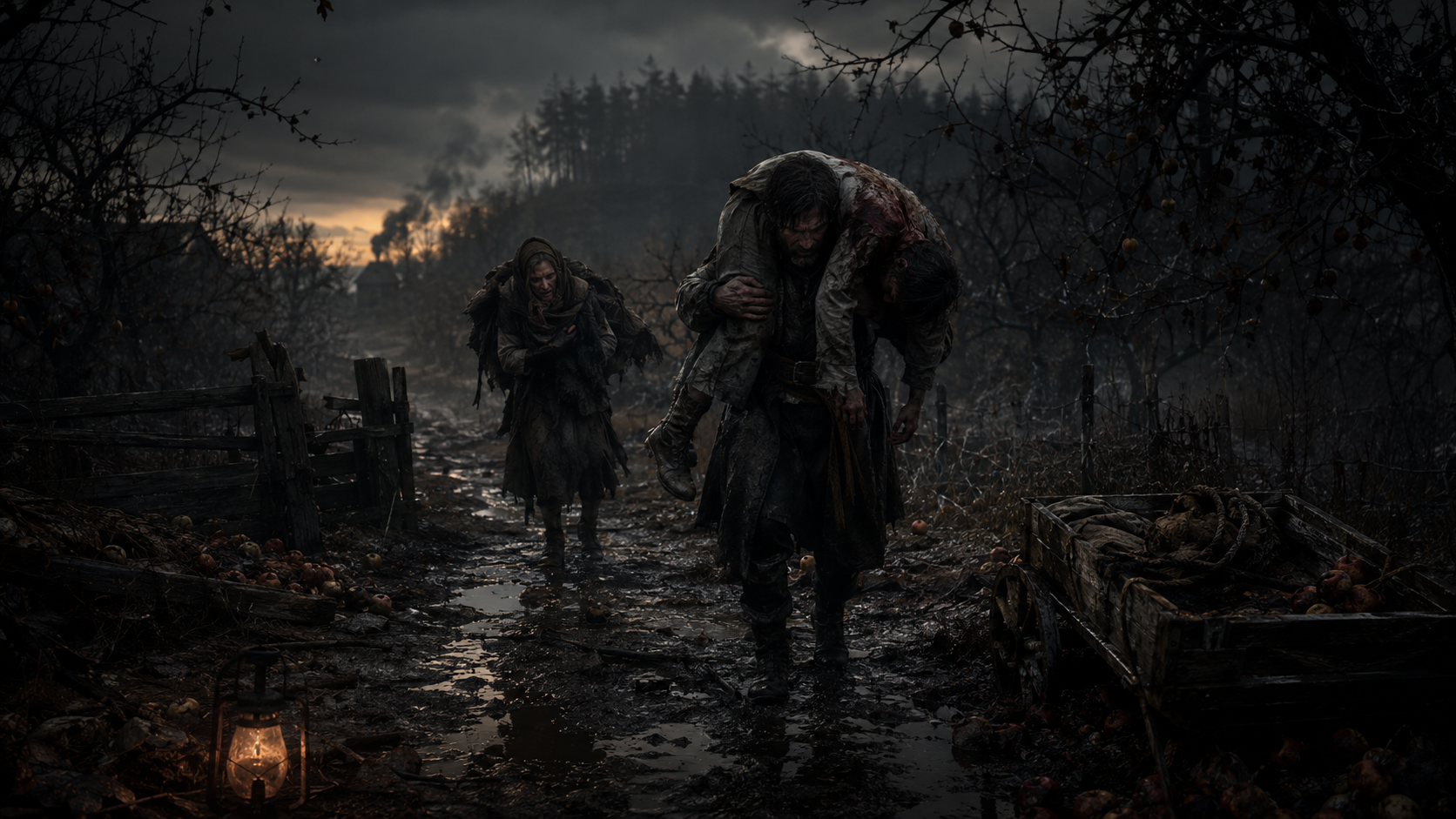
Morality becomes expensive when every option costs something.
Living minds
Nothing resets because
the scene is over.
Characters in HUSK remember what happened, react to it, and carry it forward. A single choice can reshape trust, behaviour, alliances and the mood of the group long after the moment has passed.
You might survive a bad decision. You might even get what you wanted. But the characters around you — and the group you come back to — may not be the same.
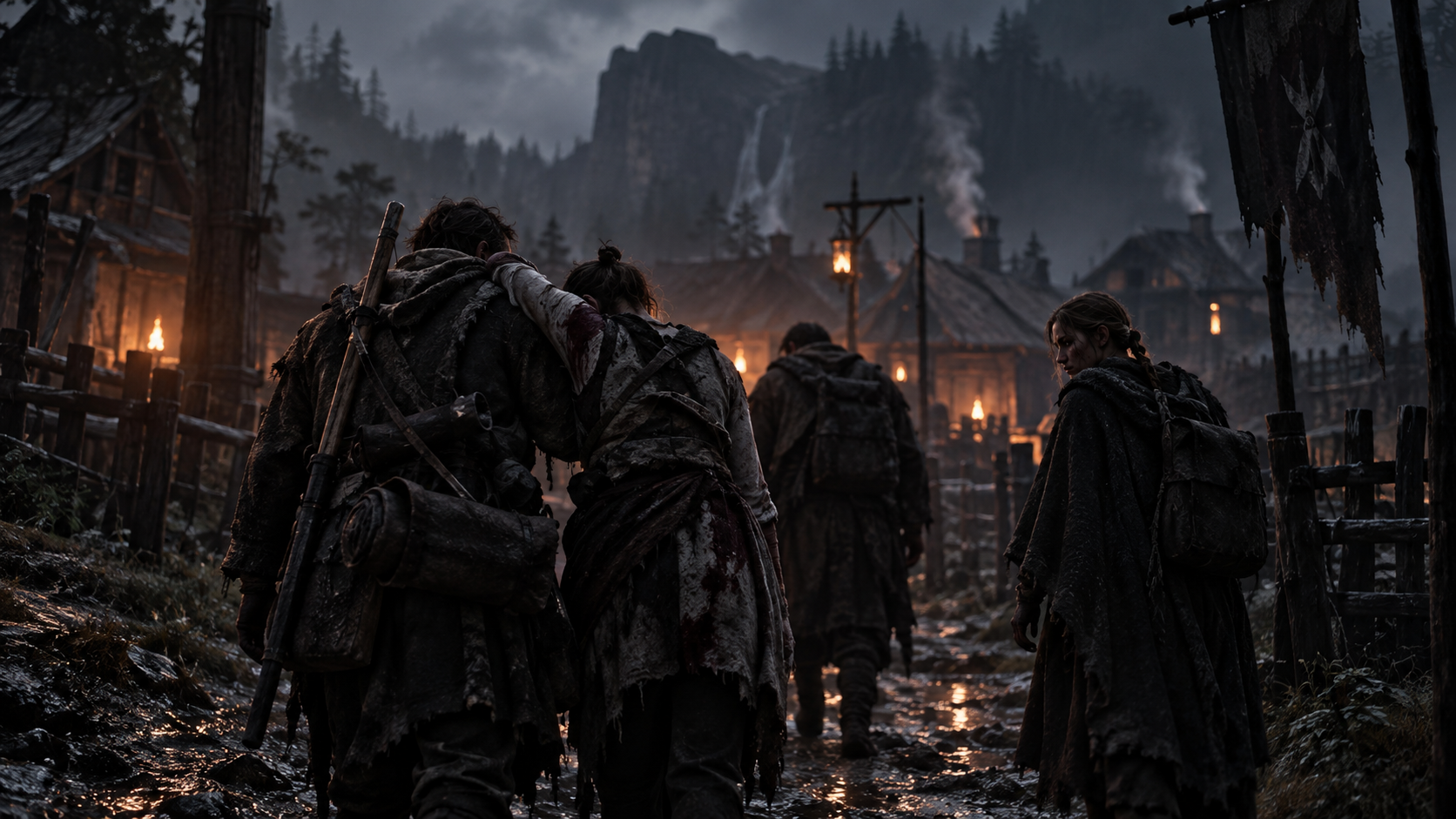
Our core design goal
We want to create reflection, discomfort, attachment, grief and emotional honesty through participation.
The monsters and wilderness apply physical pressure. The true focus of HUSK is what pressure does to people emotionally over time.
Why HUSK?
A husk is what’s left after everything else has been stripped away.
That’s what the game is about. Not the choice itself, but what remains after the choice has been made. Every decision removes something — time, safety, certainty, options.
You keep moving. You keep choosing. Eventually, you’re left standing inside the consequences of everything you’ve done.
HUSK is about what remains.